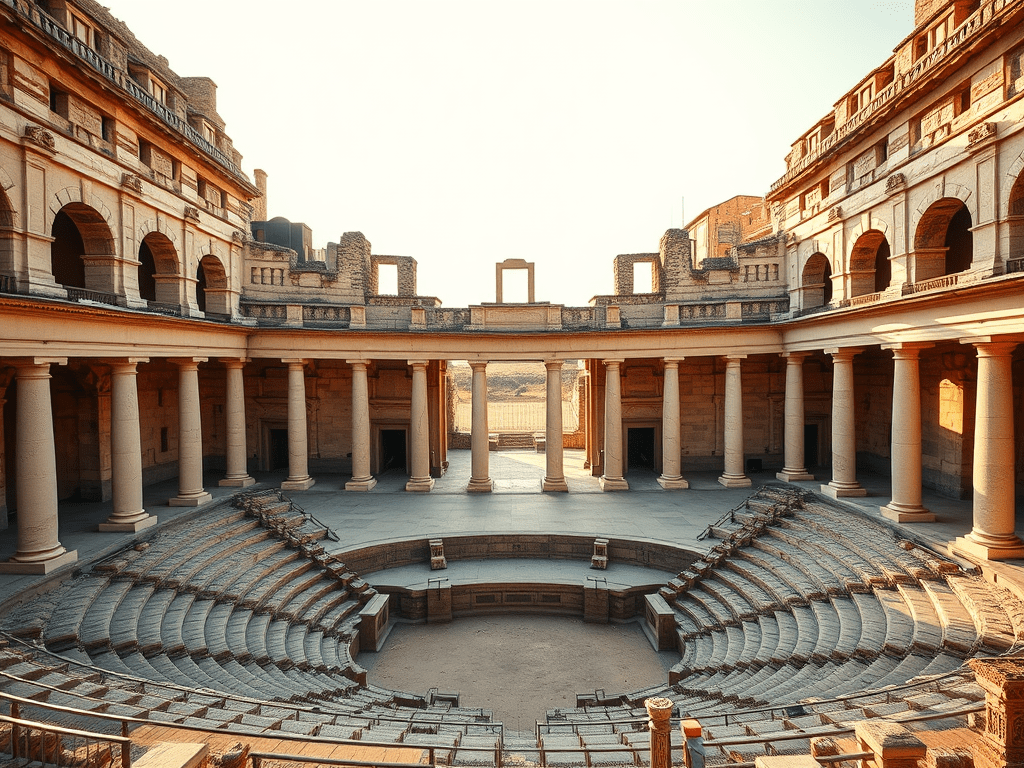
The Roman theatre of Anzio is located on the plateau of Santa Teresa, just north of the centre of the town: today it is the most beautiful residential area, but in the past it was occupied by the ancient Anzio
The cavea, 30 metres in diameter, was divided into 11 wedge-shaped radial sectors interrupted by a semicircular corridor that allowed spectators to flow either directly into the orchestra area or, via two flights of stairs, towards the upper parts of the cavea. Behind the stage there are traces of four compartments, probably used by the actors, and a staircase that evidently led to a balcony above the stage wall. Immediately behind the stage a series of column bases are the remains of the portico that served, in case of sudden rain or strong sunshine, to give shelter to the spectators.
On the dating of the structure, scholars have so far agreed that the construction of the theatre was related to the Neronian dedication of a colony of veteran praetorians in the second half of the 1st century AD.
Architectural Marvels:
Roman theaters were monumental structures designed to accommodate large audiences.
The cavea, the seating area for the audience, was divided into sections reserved for different social classes. The stone or concrete tiers could host tens of thousands of spectators. The orchestra, situated in front of the stage, was initially intended for choirs and dances.
Theatrical Performances:
Roman theatrical performances were often part of festivals or religious celebrations. Tragedy and comedy were prevalent theatrical genres. Roman comedy, in particular, was known for its sharp satire, featuring stereotyped characters and humorous situations.
Actors, mostly male, used masks to portray different characters, emphasizing expressions and features. Masks were crucial for distinguishing characters and conveying emotions to the vast audience.
Scenography and Special Effects:
Roman theaters were renowned for their elaborate scenography. Scenes could be grand and realistic, employing movable architectural elements, intricate mechanisms, and secret traps. These innovations allowed for a variety of special effects, such as the triumphant entrance of characters or the appearance of deities.
Roman Playwriting:
During the Imperial period, authors like Seneca became known for their tragedies, often addressing philosophical and moral themes. Roman comedy, on the other hand, was more connected to daily life, incorporating political and social references. Playwrights like Plautus and Terence were prominent comedic figures, contributing to a comedic tradition rich in plots and humorous situations.
In conclusion, Roman theater stands as a significant chapter in the history of Western theater, featuring majestic architecture, engaging performances, and a rich dramatic tradition. Its influence continues to be reflected in contemporary theatrical forms.
 Anzio Beach