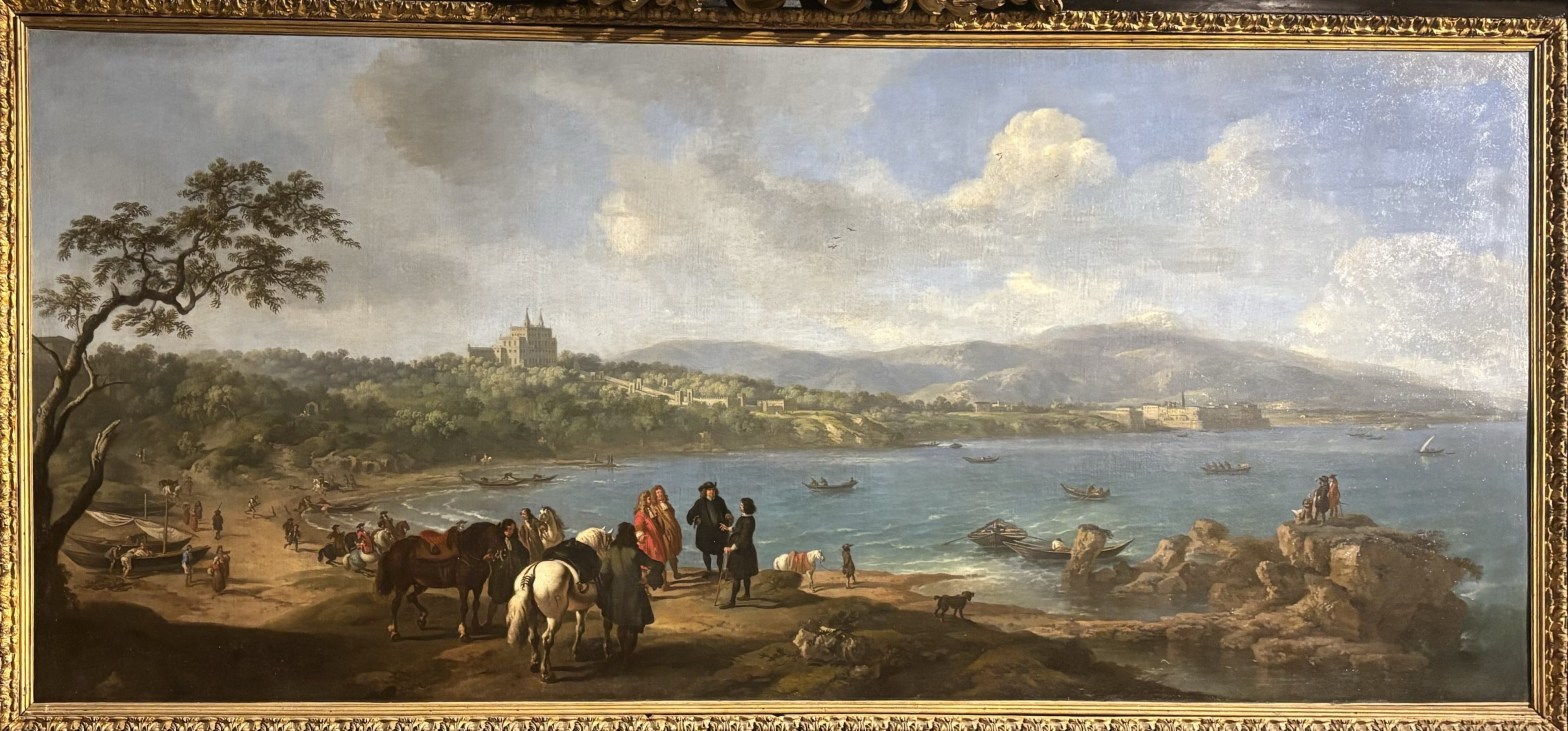
Artists who have called Anzio home over the centuries have significantly contributed to the cultural richness of the city.
Among them, the Italian Renaissance painter Antonio da Correggio stands out, renowned for his emotionally impactful works. Anzio has also inspired landscape painters like Ettore Roesler Franz, whose love for nature is evident in detailed paintings capturing the beauty of the surrounding countryside.
In the modern era, the Futurist painter Gino Severini spent time in Anzio, influenced by the maritime landscape that permeates many of his works. The vibrancy of colors and dynamism of subjects in Severini’s paintings reflect his connection to the lively atmosphere of Anzio.
Other local artists, such as contemporary painter Francesco Mancini, have continued the city’s artistic tradition. Mancini, known for his ability to capture the essence of everyday life, often depicted scenes of Anzio and its inhabitants, contributing to visually documenting the community’s history.
Anzio’s influence extends beyond national borders, with international artists finding inspiration in its unique atmosphere. This artistic melting pot has made Anzio a place rich in creative diversity, featuring a wide range of styles and artistic approaches that reflect the complexity of its history and cultural identity.
It was Pier Francesco Mola (1612-1666), commissioned by Prince Camillo Pamphilj, together with Pandolfo Reschi (1640-1696) in the service of Cardinal Francesco Maria de’ Medici, and Christian Reder (1656-1729) in the service of Innocent XII (1691-1700), who inaugurated this important pictorial production on the Anzio coastline. In their wake, to document the coming to Anzio of Benedict XIV (1740-1758), Paolo Anesi (1697-1773), in the service of Cardinal Corsini painted several canvases and suggestive ‘capricci’ in the style of the time. The interest of these great masters in Porto d’Anzio kindled the curiosity of other painters from all over Europe. Not only Italian artists painted at Anzio, but also English, Danish, French, German, Dutch, Polish, Swiss, Austrian and Spanish artists, who portrayed the Anzio coastline and the Roman beach from Civitavecchia to Terracina throughout the 18th and 19th centuries. In Anzio, Giovanni (Nino) Costa (1826-1903) conceived his masterpiece Women loading wood at the port of Anzio (Galleria Nazionale d’Arte Moderna, Rome) in 1852, which opened up new horizons for Art in the second half of the 19th century. In 1866 on the Neronian shores Anselm Feuerbach (1829-1880), one of the greatest exponents of 19th century German painting, found inspiration for his Medea, one of his best known works (Neue Pinakothek – München).
 Anzio Beach